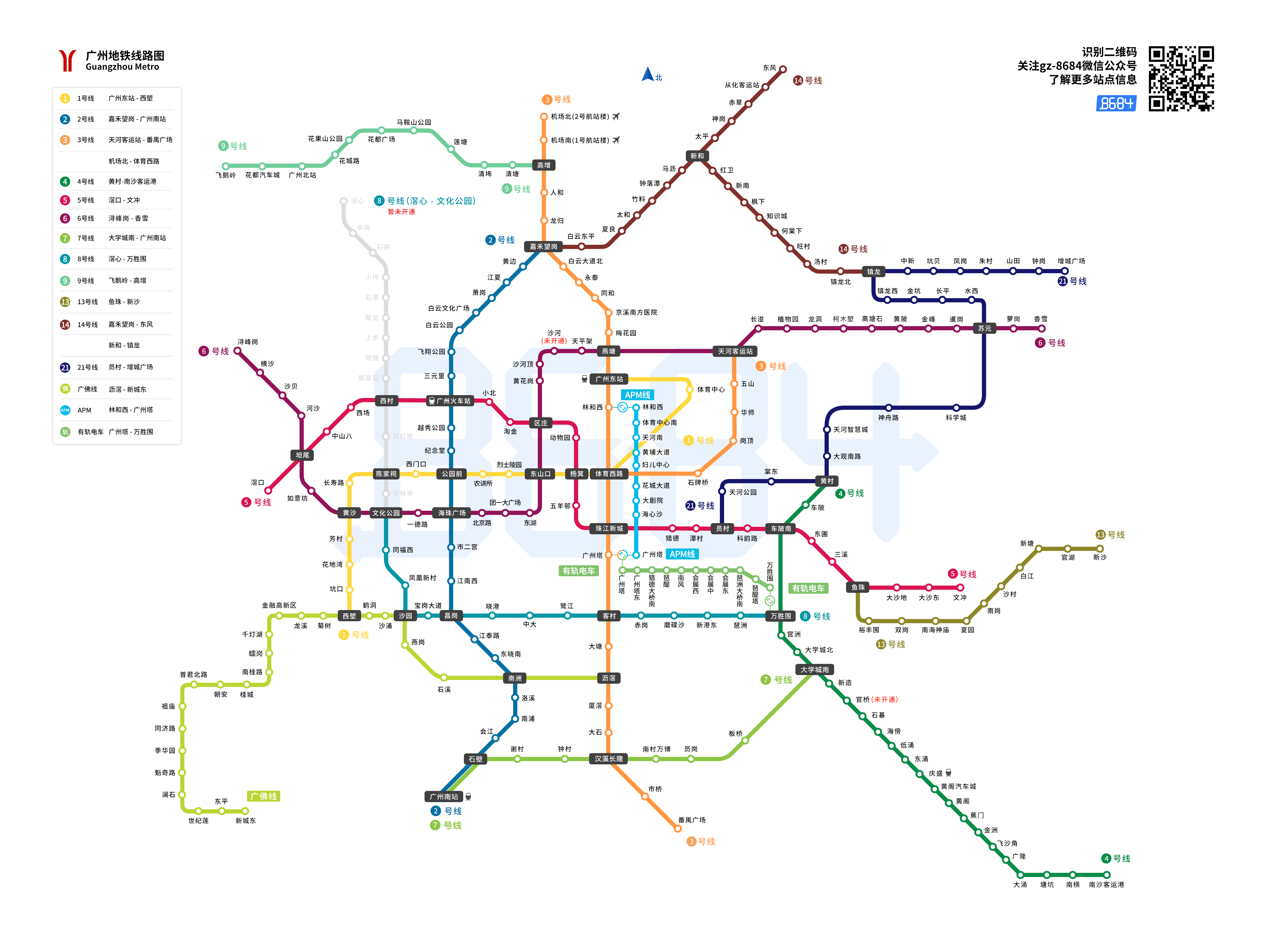
Serverless Guangzhou Metro

The essence of the web is a flow, a circulation of data. Today’s web is essentially a special case of Serverless (a long‑lived version of Serverless).
From this perspective, Guangzhou Metro is actually a beautiful Serverless system.
The Essence of an Efficient Web System
The fundamental goal of a high‑efficiency web system is to make data flow as fast as possible (the higher the TPS, the better). This coincides perfectly with the design philosophy of Guangzhou Metro.
I once mentioned on Zhihu:
The essence of Guangzhou Metro is a drainage system.
Its goal is not necessarily to transport you to a destination but to flush you out of the station as quickly as possible.
That’s why entering and exiting immediately still costs money now (though I remember a time when it used to be free).
Back to the main topic.Serverless is a design in which the runtime lifespan is relatively short.
For example, Guangzhou Metro mainly operates during daytime while the infrastructure receives maintenance at night.
To simplify the analysis, let’s only consider Line 1.
Suppose normally 3~50 trains run:
- Low peak → Only 3 trains (cost reduction)
- Peak → Maximize throughput while ensuring safety (add more trains)
- Night → 0 runtime instances (all trains offline)
Advantages of Serverless
Cost Reduction:
Each station can operate with minimal staff. Metro operators do not need to care about underlying system maintenance — they just sit in the control room, press a few buttons, and chill.
Rapid Innovation:
Previously, passengers had to buy paper tickets. Now UnionPay, NFC, WeChat Pay, and Alipay are all supported.
Elastic Scalability:
Resources can be scaled dynamically based on configuration and conditions:
- Night → sleep (0 instances)
- Low peak → run only 3 instances
- Peak → run 50 instances
- Ultra‑peak → throttle (limit requests/boarding)
→ Maximum resource efficiency and lowest operating costs
Guangzhou Metro is Essentially Real‑Time Data Stream Processing
From the passenger’s perspective, riding the Metro is equivalent to a database transaction:
- Atomicity: a girl either boards or does not board the train
- Consistency: if she exits at the wrong station, consistency is violated
- Isolation: the girl ignores you
- Durability: all trip operations are persisted (entry/exit validation records)
From the system perspective, Guangzhou Metro implements distributed transactions using a real‑time data stream processing architecture.
Guangzhou Metro in 2020
Front‑end Always‑On, Back‑end Dynamically Scaled
All the fixed infrastructure is always present → the front‑end.
Trains come and go → the back‑end.
Since human lives are involved, scaling decisions rely on historical data and are still manually controlled today.
This also inspires web architecture design:
From a Serverless perspective:
| Component | Ideal Behavior |
|---|---|
| Front‑end | Always‑on, lightweight, hardened by cache & Service Worker |
| Back‑end | Scaled dynamically, run only when needed |
→ Better user experience without sacrificing efficiency
Traffic Sharding
During peak hours, gates are added.
During extreme congestion: skip stops or deny boarding.
This is essentially data safety control (passenger safety).
Metering Capability
Fare is based on travel distance, which in essence equals time.
The longer the usage, the higher the cost — just like the cloud.
Single Responsibility of the Back‑end
Guangzhou Metro is primarily for passenger transport, not freight.
Every time I move house, I find the Metro inconvenient — because the design goal is a drainage system.
Freight would drastically reduce throughput.
Thus, when designing Serverless microservices:
Keep responsibilities extremely small — small enough to not even require service discovery
Example: Cloud storage performing instantaneous video transcoding via Serverless.
Greater Bay Area on Rails
By 2025, Guangzhou Metro already has a circular line. I rode it several times and found that the design of stations and platforms integrates cultural creativity and digital aesthetics — a sign of full Greater Bay Area integration.
Conclusion
Guangzhou Metro is a highly efficient Serverless system.
It leverages decades of passenger flow data to achieve:
- High‑efficiency operations
- Safety of passengers (= data safety)